AfriEvolve Project
Project overview
NGOs often play a critical role in civil society worldwide. They advocate for the interests and needs of local communities and minorities and secure access and maintenance of natural livelihoods. Nevertheless, local NGOs in Africa often face challenges: Restrictive national NGO laws often prohibit political involvement and restrict fund access. Consequently, many NGOs are struggling to secure long-term funding and see their influence on political decision makers for conservation topics limited – both at national and regional level. To strengthen NGOs in Africa, NABU and six green NGOs from West and East Africa are setting up regional cluster networks for enhancing organisational development and capacity building.
All six African NGOs work at the focal point between conservation in and around protected areas and the needs for livelihoods of local people. In particular, land use of all kinds lead to permanent conflicts between local communities and the respective protected area management, as well as to increasing pressure on wildlife, forests, water bodies and other habitats. The effects of climate change such as heavy rain falls, unexpected frost, extreme dry spells and erosion are exacerbating poor harvests and crop failures. This in turn results in poverty and increased dependency of people on the natural resources of their environment. The way forward here is the conversion of current land use to sustainable forms taking impacts of climate change into consideration so that yields can be stabilised and livelihoods secured. Therefore, the six partner NGOs are introducing Climate Smart Agriculture (CSA) with local farmers at six selected sites.
Visit Project website
Project site
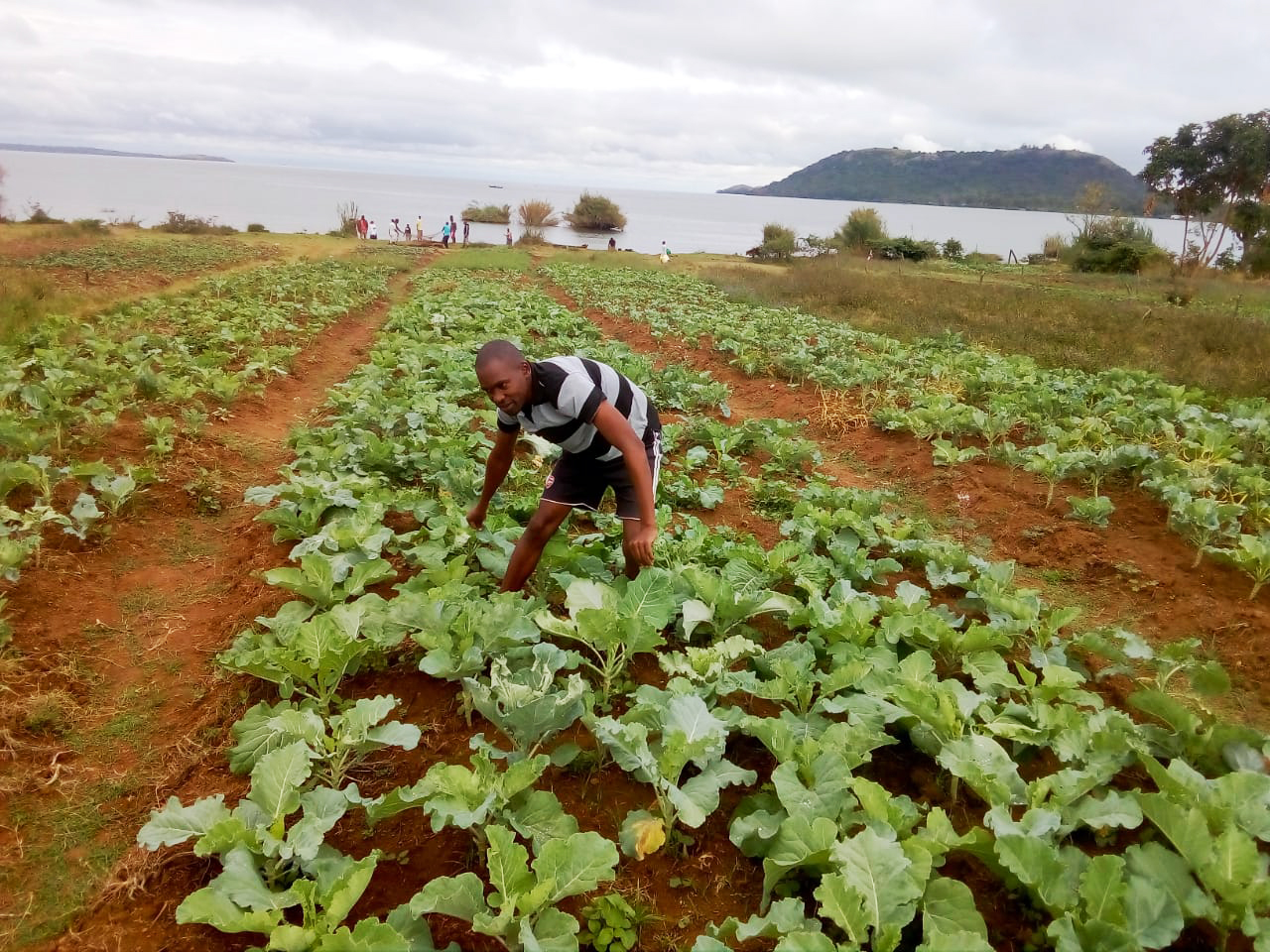
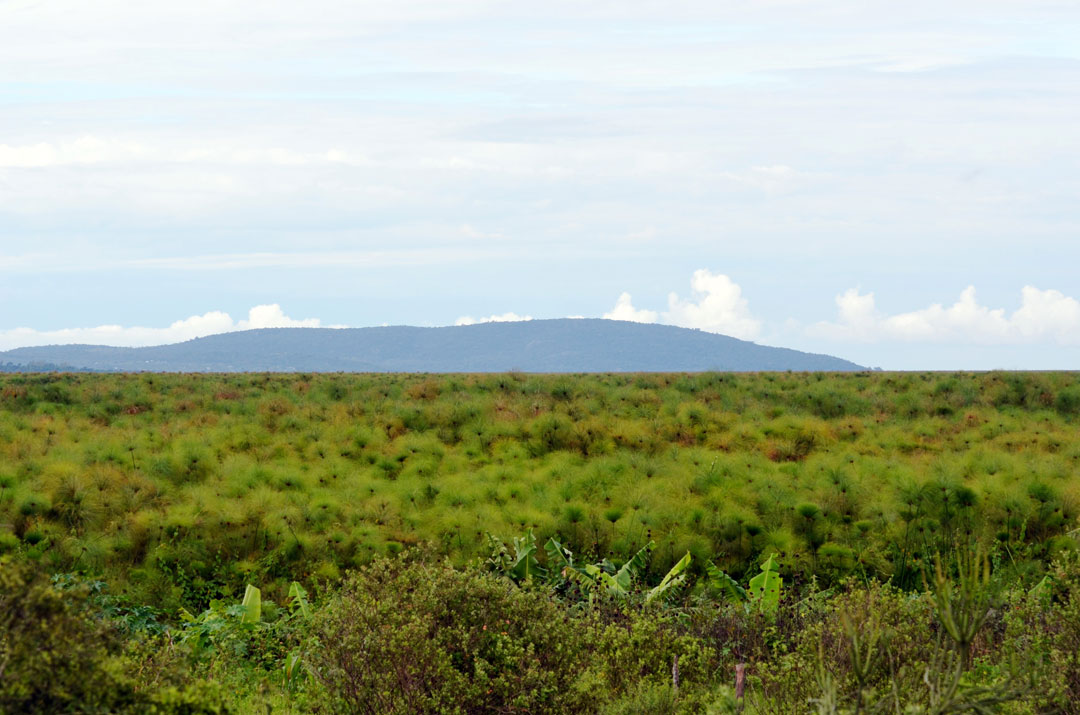
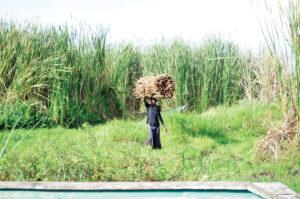
The Yala Delta is situated at the North-Eastern end of the Lake Victoria and is Kenya's largest freshwater wetland with 20,756 ha. The ecosystem is a Key Biodiversity Area (KBA) classified by BirdLife International among Kenya’s 60 important Bird Areas. The papyrus swamps are home to rare blue-breasted bee-eater (Merops variegatus) and papyrus gonolek (Laniarius mufumbiri), among others. The wetland acts as a critical filter for water inflow into Lake Victoria. The delta provides 250,000 farmers in its vicinity with vital resources such as fish, papyrus and timber. However, Yala's ability to function is severely threatened by the establishment of large-scale agricultural enterprises by foreign investors and the overexploitation of its natural resources.
Project facts
Project title
AfriEvolve - capacity development for green NGOs in Africa
Countries
East Africa: Kenya, Tanzania, Uganda
West Africa: Ghana, Côte d'Ivoire, Burkina Faso
Period
February 2021 to December 2023
Partners
Fondation NATURAMA (West Africa cluster coordinator), Nature Kenya (East Africa cluster coordinator), Ghana Wildlife Society, Nature Uganda, SOS-Forêts, Nature Tanzania
Sponsored by / Supported by
The project is supported by the German Federal Ministry for Economic Cooperation and Development (BMZ) and NABU
Advised by / Regulated by
BirdLife International, Consultative Group for International Agricultural Research (CGIAR), Food and Agriculture Organization (FAO), Potsdam Institute for Climate Impact Research (PIK)
With this project we are contributing to the following SDGs
SDG 1, SDG 2, SDG 4, SDG 5, SDG 7, SDG 12, SDG 13, SDG 15 and SDG 17.
Project Updates
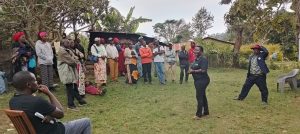
Women in Taita taking bold steps to rewrite traditions
By Gilbay Obunga For generations, women across Africa were expected to remain at home, tending households, fetching firewood, and leaving decisions about land and forests to men. But in the misty hills of Taita in Taita Taveta County, Kenya, a silent shift is underway. Women are stepping boldly into spaces once closed to them, […]
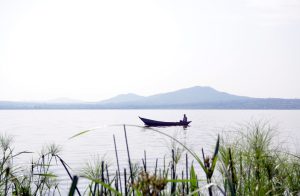
Wetlands and Traditional Knowledge: Celebrating Cultural Heritage
By Knique Okatch Every year on 2nd February, the global community marks World Wetlands Day, this year guided by the theme ‘Wetlands and Traditional Knowledge: Celebrating Cultural Heritage.’ The theme draws attention to a reality often overlooked in conservation debates: wetlands are living cultural spaces, shaped by the knowledge, values, and practices of the […]
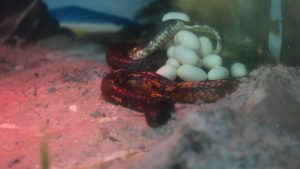
Rescue and Relocation of an Egyptian Cobra
By Kenneth Gachucha On 1st January 2026, Nairobi Snake Park received an unexpected New Year’s guest: a nearly two-metre long Egyptian cobra safely captured in the Mlolongo area. This silent, swift, and highly venomous reptile, one of Africa’s most formidable snakes, needed expert intervention after crossing paths with human settlements. Just weeks after arriving at […]
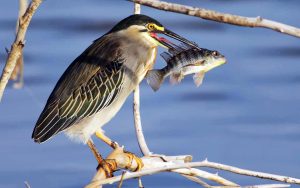
KBA in Focus: Lake Baringo
By Joshua Sese Lying on the floor of the Rift Valley between Laikipia Escarpment and Tugen Hills in Baringo County, Lake Baringo Key Biodiversity Area is a rare freshwater lake in a landscape dominated by saline systems. Fed mainly by the Molo and Perkerra perennial rivers, the lake is surrounded by acacia woodlands, wetlands, volcanic […]
KBA in Focus – Kinangop Grasslands
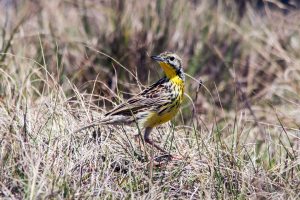
Joshua Sese Stretching across the windswept Kinangop Plateau in Kenya’s central highlands on the edge of the Great Rift Valley, the Kinangop Grasslands Key Biodiversity Area is a rare and irreplaceable ecosystem where open montane grasslands coexist with vibrant rural livelihoods. This site is neither a national park nor a gazetted reserve, but a mosaic […]
Bird Ringing Takes Flight at Lake Elmenteita
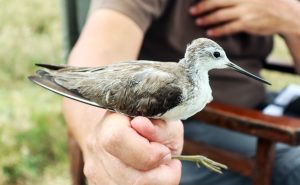
By Aloise Garvey Lake Elmenteita Serena Camp launched an exciting new bird ringing project in December 2024, marking a significant step in sustainable tourism and avian conservation in Kenya’s Rift Valley. The three-week pilot programme, conducted with Kenya Wildlife Service, National Museums of Kenya and Nature Kenya, successfully ringed 129 birds despite challenging conditions. Lake […]

Winged Scientists: What Dragonflies Reveal About Our Water
By Makena Murithi Forget complex chemical tests. The most telling sign of a healthy freshwater ecosystem might be the iridescent flash of a dragonfly’s wing. There’s a familiar magic to a summer’s day by a pond, punctuated by the insect’s darting flight. Like a living jewel, a dragonfly hovers with prehistoric grace. But what if […]
Youth taking lead in community-based adaptation to climate change in Yala
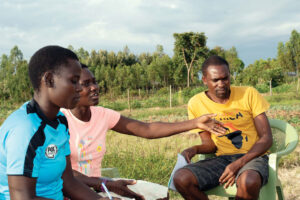
By Emily Mateche As the world reels from droughts, floods, heat waves and wildfires, the global focus is shifting towards green agricultural practices to cope with the effects of climate change. Climate-smart agriculture is emerging as one of the sustainable farming alternatives. And farming, long regarded as a preserve of the middle-aged and elderly, is […]
The wetlands of Kenya
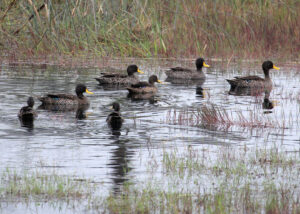
The early morning’s sun rays gleam against the shiny mangrove leaves along the shores of Sabaki River Mouth, where the Athi-Galana- Sabaki River pours into the Indian Ocean. For nature lovers, Sabaki River Mouth is a haven of biodiversity. But for private developers who have lately been eyeing this ecologically sensitive area, it is a […]
Help us save Yala Swamp, say local communities
Along the Kombo dyke that separates Lake Kanyaboli and the vast Yala Swamp in Misori, Siaya County, clumps of papyrus reeds dance to the gentle morning wind. Fishermen in traditional wooden canoes paddle through the calm lake waters, occasionally making stops to inspect their traps. Pied Kingfishers lay in wait to catch some fish. Many […]
Project Partners